

The nature of the Azerbaijan-Russia relations: through crisis to more symmetry
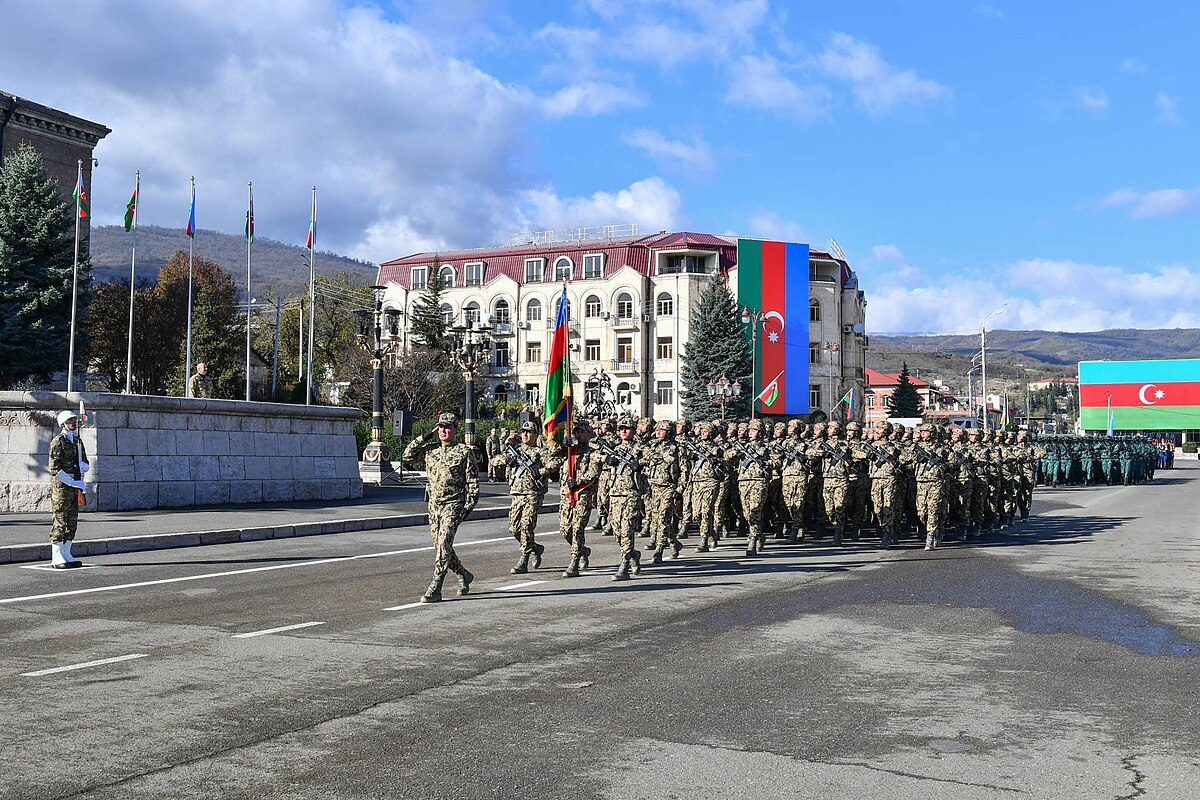



Azerbaijan-Russia relations are under considerable pressure. The “allied cooperation” established by Vladimir Putin and Ilham Aliyev in February 2022 is not able to absorb the adverse effects of the looming crisis. The triggers for the souring relationship are the incidents in which Russia harms Azerbaijani citizens, resulting in fatalities. The crisis mood in bilateral relations is readily apparent, as the language displayed by the two sides was inflammatory. The Russian official channels claim that Baku is “deliberately dismantling” the bilateral relations. Similarly, the Azerbaijani state-affiliated news agency conveys a message suggesting that Russian authorities use violence against Azerbaijani citizens, including inhuman treatment, torture, and “brutal killing”. To calm the situation, it may be necessary for Putin and Aliyev to intervene and prevent further deterioration of state relations. The Turkish leader, Recep Tayyip Erdoğan, has suggested that both sides show restraint, to avoid a “new conflict” in the Caucasus and prevent further damage. Such a development is not yet foreseen, but should not be ruled out. While Russia cannot afford to lose friendly states in the post-Soviet space, Azerbaijan appears to be self-sufficient. Amid the row with Russia, Azerbaijan could extract benefits from the EU, which faces growing pressure for not taking a hard stand on severe human rights violations by Aliyev’s regime. Moscow’s choices are limited, since the rift with Baku can create more synchronisations between Azerbaijan and Armenia, cornering Russian influence in the South Caucasus. As long as Russia is kept busy in Ukraine, it has very few resources left to restore the imbalances that served its hegemonic status in the region for 30 years after the collapse of the USSR.
The mismatch of Russia’s regional position with the “parity” quest of Azerbaijan
The persistent inability of Russia to end its aggression on Ukraine, which grinds into the fourth year of full-scale war, on its terms, increases its irrelevance as a geopolitical player on a regional scale. It is, namely, Russia’s debilitated geopolitical status, that contributes to the ongoing questioning of the past asymmetries which Russia created to its advantage in its relationships with the smaller South Caucasian countries. The region is shifting to a new balance of power, where Russia’s position is becoming smaller. Taking this into account, it seems natural that Azerbaijan is expanding its geopolitical muscles faster than Russia’s readiness to admit the fading shadow of its previous regional indispensability. Therefore, Baku’s decision to clash with Russia is not only about the humanitarian side of the story, which involves the protection of the Azerbaijani citizens. Reacting to events that affect Azerbaijani nationals at the hands of Russian authorities represents another way for Aliyev to project power. It serves to strengthen his image and consolidate the loyalty of the public audience towards the regime at a time when human rights are being eroded, attracting the critical attention of the EU.
The quest for parity that Azerbaijan is currently conducting in its relations with Russia is necessary for Aliyev. The lack of a strong response to Russian actions may be perceived as a weakness for Baku, a style somewhat reminiscent of Putin’s regime. The incident of December 2024, when the Russian air-defence system “mistakenly” hit Azerbaijani Flight 8243 en route to Grozny Airport, was not followed by the Kremlin’s punishment of the culprits. As a result, when the raids on a criminal organisation involving more than 50 Azerbaijani ethnic Russian citizens in Yekaterinburg took place in June, leading to fatalities, Baku went almost immediately for retaliatory measures. Subsequently, published on 29 June, the Azerbaijani Minister of Education cancelled the Russia-dedicated cultural events and the official visit by Russian Deputy Prime Minister Alexei Overchuk. The fact that the cancellation was made public, in a post on X, rather than choosing a more discreet method, indicates that Baku did not shy away from attracting the attention of the international community. The televised arrest of two Russian journalists from “Sputnik Azerbaijan”, linked to “Russia Today”, who continued producing online content without official accreditation after the media outlet’s closure by the Azerbaijani authorities in February 2025, further antagonised Russia. Baku’s actions against “Sputnik Azerbaijan” are a low-hanging fruit due to the crimes attributed to the journalists, including illegal financing, illegal entrepreneurship, and the legalisation of property through criminal means. By targeting the journalists who belong to Russian official propaganda, the Azerbaijani authorities admittedly wanted to escalate tensions and reach the office of Putin. The arrest of other Russian journalists, accused of smuggling drugs from Iran, was part of the same chain of Azerbaijani reactions. However, the most painful gesture, involving Aliyev himself, was the official meeting with the Ukrainian president, Volodymyr Zelenskyy, which took place on July 1. Besides expressing solidarity with Azerbaijan, Zelenskyy used the occasion to accuse Russia of “hatred, chauvinism, and cynicism.” Notably, despite the limited relations with Moscow, Aliyev’s office avoided mentioning Zelenskyy’s remark on “Russian chauvinism”, indicating a weak signal of lack of interest from Baku in siding with Ukraine against Russia. This may confirm the hypothesis that Aliyev seeks to put his country on par with Russia. Naturally, this could also involve a certain privileged status for the Azerbaijani ethnic group in Russia, thereby preserving respect within the domestic public. Following the final stage of the integration of territories, with the recapturing of the Nagorno-Karabakh and the dismantling of the separatist regime in 2023, there is a legitimate concern that the population may rise against human rights violations, which exacerbates the autocratic style of governance.
Azerbaijan’s fearless attitude toward Russia
Over the past three years, Azerbaijan has gradually built up its confidence in the power competition with Russia in the region. Firstly, following the second 2020 Nagorno-Karabakh War, Baku’s military goal of full reintegration of its territories both pushed Russia out of Nagorno-Karabakh in the first half of 2024 and deteriorated the Armenian-Russian ties. Secondly, Azerbaijan offered itself to the EU as a convenient replacement for Russian gas supplies, with Italy becoming one of the largest buyers of Azeri gas in Europe. Due to the EU’s strategic interest in decoupling from Russian gas, Azerbaijan has managed to create energy interdependencies with the EU that protect it from direct criticism. Third and lastly, Baku gained a strong position in the South Caucasus. In Georgia, Azerbaijani gas accounts for approximately 80% of the country’s gas imports. This is supplemented by $3.6 billion in direct investments from Azerbaijani companies, as of April 2025. Simultaneously, in Armenia, Nikol Pashinyan’s desire to negotiate a peace deal, accepting costs for the political survival of his government, also favours Baku. If the structural irritants between Armenia and Azerbaijan, such as peace and borders, are sorted out, Russia’s role as the security guarantor of Armenia disappears. Consequently, the closure of the post-Soviet Russian military base in Armenia will become another step taken by Armenian authorities towards regaining sovereignty from Russia. All three dimensions in which Azerbaijan built a hard-to-ignore leverage hurt Moscow’s strategic interests in the region. In an uncertain regional context, Russia will likely try to bridge the rifts to avoid damaging the “allied cooperation” with Baku, which also includes providing military assistance when peace and stability are at risk. To preserve what Aliyev called “the friendly and allied nature of our relations,” on which peace in the South Caucasus depends, referring to bilateral relations in February 2022, Putin’s intervention may have the necessary calming effect.
Temporary solutions: damage control
Azerbaijan’s desire to establish symmetric relations is not necessarily what concerns Russia, but rather how this goal is achieved. When Azerbaijan criticised the raid in Yekaterinburg, it touched on what Russia sees as its internal affairs. The retaliatory measures taken by Baku against Russia might be viewed in Moscow as excessive, as they could incite more anti-Russian sentiments. From Baku’s perspective, the arrest of over 50 members of the Azerbaijani community on organised crime charges, along with casualties, could harm the security of Azerbaijanis within Russia.
A quick fix for the very heated situation in which the two sides encountered each other could become the end of the legal prosecution of the Azerbaijani community from Yekaterinburg in exchange for the release of the Russian journalists jailed in Azerbaijan. Otherwise, the “snowball effect” will keep rolling, producing more damage. The disinformation channels were quick to exploit the breach in bilateral relations to spread the news that Russian language teaching in Azerbaijani educational institutions could be suspended. Altogether, up to 1 million pupils and students, or roughly one-tenth of the population, learn Russian as a first or second language in 324 schools and 26 universities. Russia worries about the humanitarian aspect of bilateral relations, as it can significantly impact Russian “soft power” if compromised. Economic connections are also important for both nations. In 2024, Azerbaijan’s exports to Russia amounted to $1.2 billion, which is less than half of Russia’s trade dependency on Azerbaijan, at $3.6 billion. More crucial for Russia’s global ambitions is the 7,200 km North-South route, linking St. Petersburg with India through Iran and Azerbaijan. The Western economic and transport sanctions increase the significance of the corridor for Moscow more than for Baku, which could also benefit from it if it chooses to diversify its economic connections toward the Global South to reduce reliance on the EU in the future.
In the short term, the damage control could include the release of arrested individuals on both sides. To rebuild the bilateral trust, Moscow will have to prove to Baku that it takes seriously its concerns about the rights of the Azerbaijani community and the information activity of Russian state propaganda. Both aspects are crucial for Aliyev’s ability to curate his domestic legitimacy. With the peace negotiations with Armenia progressing, the political regime in Baku may feel an urgency to boost the population’s sense of national pride, alongside the perception of economic growth, to counteract the state’s brutality against critical media and civil society. In this sense, establishing parity in dialogue with Russia is rooted in the self-preservation of Aliyev’s rule, especially since Russia might attempt to use its military base in Armenia, reportedly undergoing a sudden manpower boost, to disrupt the peace efforts. Whether Russia understands and accepts Baku’s rationale remains uncertain until Putin decides to intervene to reverse the bilateral relations from the crisis mode. Finally, the power rivalry in the region will balance out the power-sharing dynamics between Azerbaijan and Russia, should Aliyev choose to be more assertive and Russia’s relevance continue to weaken.


Denis Cenusa is an Associated Expert with GSSC and a Visiting Fellow at the School of Transnational Governance in Florence. His doctoral research at Justus Liebig University in Giessen (Germany) focuses on EU governance and Russian hybrid energy warfare in the EU’s eastern neighbourhood. Over the past 15 years, he has published comparative, country- and region-focused analyses on European integration in post-Soviet space, EU–Russia competition, the geopolitics of critical infrastructure, hybrid warfare, and great-power competition, with a particular emphasis on the Black Sea region, as well as a research interest in the emergence of Global South regions, particularly China’s influence. He is fluent in English, French, Spanish, Russian, and Romanian.
Newsletter
Subscribe to regional news and reviews.