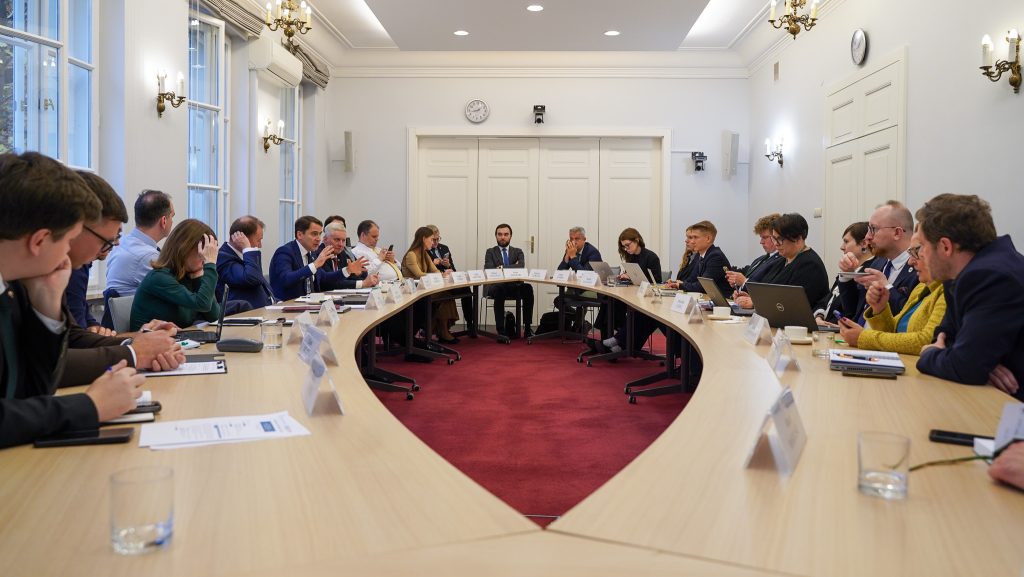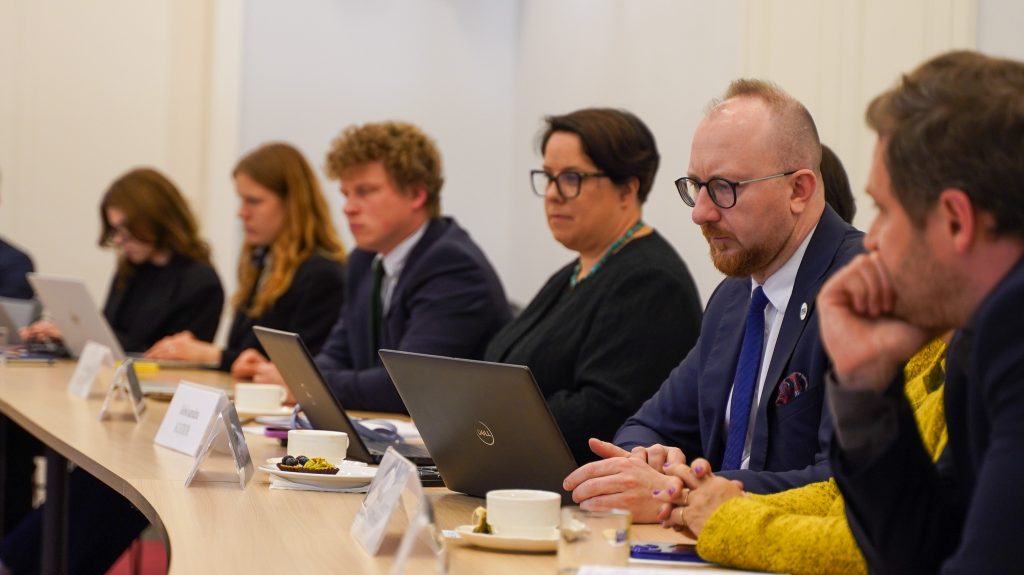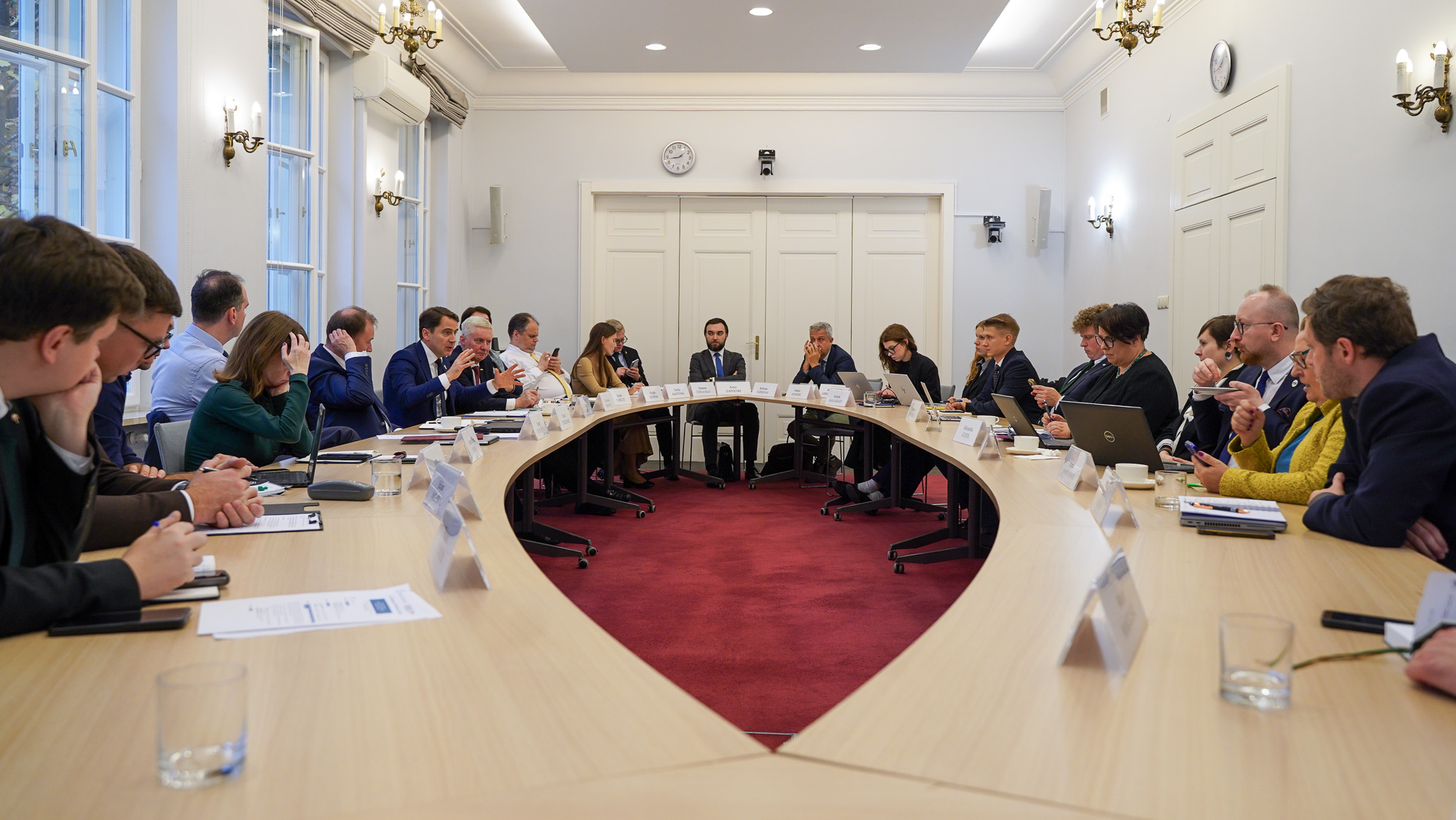


The Geopolitics and Security Studies Center, in cooperation with the Polish Institute of International Affairs (PISM) and the Lithuanian Ministry of Foreign Affairs, hosted the 11th Lithuanian–Polish Roundtable in Warsaw.
The event brought together policymakers, government officials, and foreign and security policy experts from Lithuania and Poland to exchange views on pressing regional security challenges, strengthen bilateral cooperation, and explore coordinated responses to shared threats.
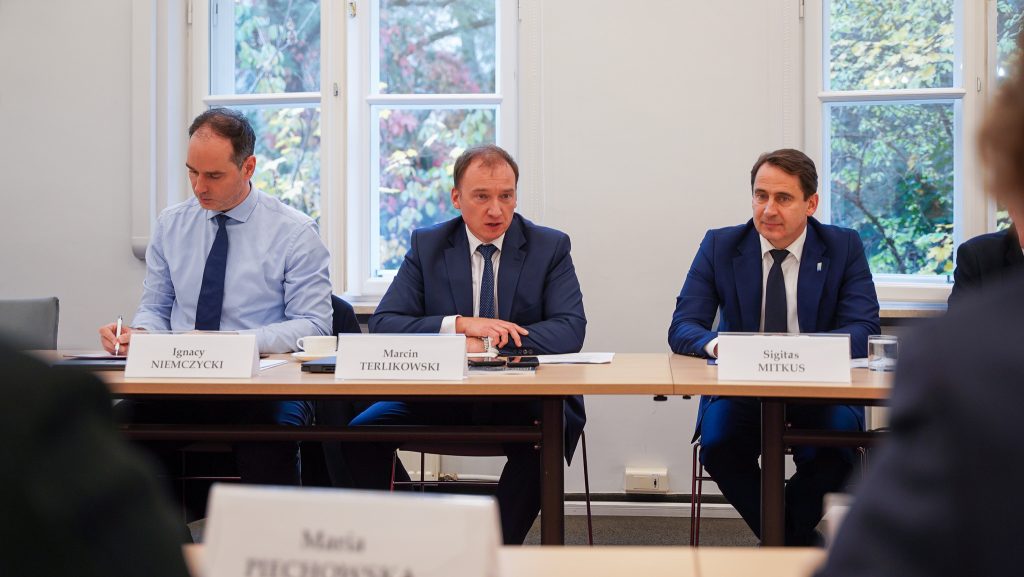
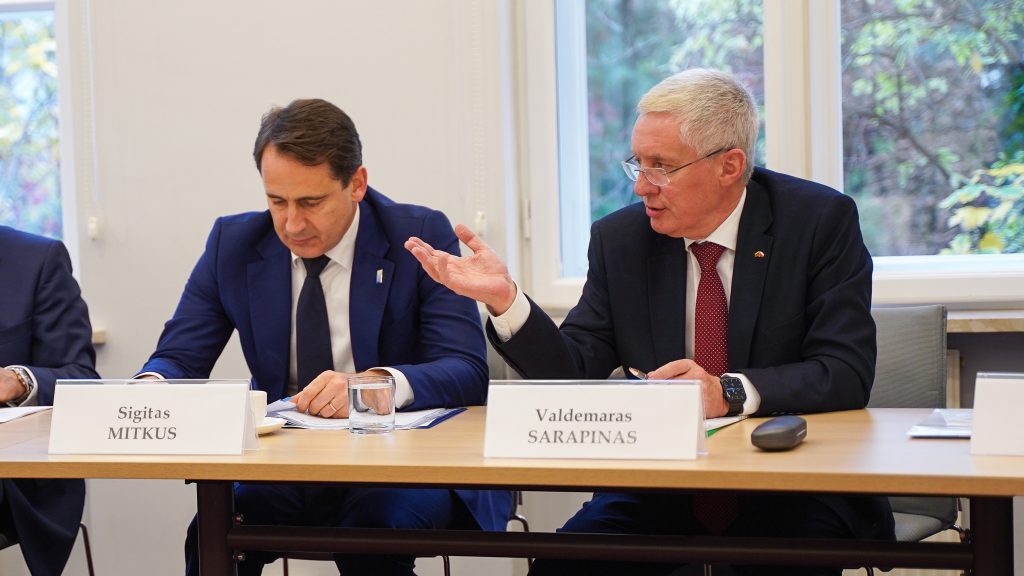
The meeting opened with welcoming remarks by Marcin Terlikowski, Head of Research at PISM, Dr. Juljan Jachovič, GSSC Chief Project Officer, and Valdemaras Sarapinas, Lithuanian Ambassador to Poland. Opening keynote addresses were delivered by Ignacy Niemczycki, Secretary of State at Poland’s Ministry of Foreign Affairs, and Sigitas Mitkus, Lithuania’s Vice-Minister of Foreign Affairs.
The discussions focused on three key areas:
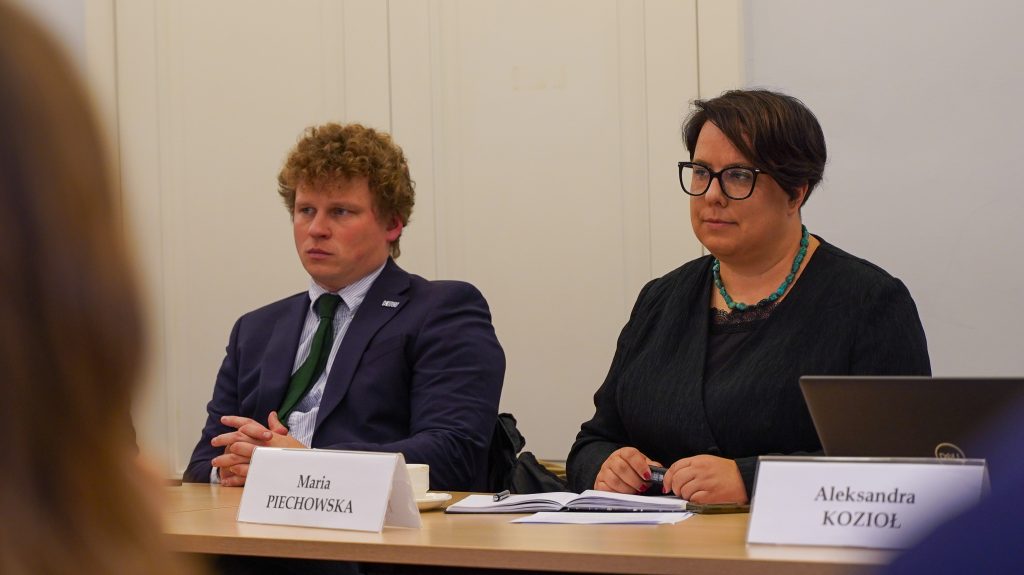
- Russian hybrid threats in the Baltic Sea region. The first panel examined the security challenges posed by Russia’s shadow fleet, damage to undersea infrastructure, cyberattacks, and acts of sabotage. Experts also explored how Lithuania and Poland could strengthen their cooperation and coordinate responses to Russian hybrid activities. The panel featured Petras Katinas, Research Fellow at the Kyiv School of Economics and the Royal United Services Institute (RUSI), and Aleksandra Kozioł, expert in PISM’s International Security Programme. The discussion was moderated by Dr. Juljan Jachovič.
- Strengthening cooperation within the Lublin Triangle. The second panel explored the future of Lithuanian–Ukrainian and Polish–Ukrainian relations, opportunities to deepen trilateral cooperation, and Ukraine’s role in Europe’s future security architecture. Speakers included Laurynas Vaičiūnas, Chairman of the College of Eastern Europe in Wrocław, and Łukasz Adamski, Director of the Mieroszewski Centre. The discussion was moderated by Maria Piechowska of PISM’s Eastern Europe Programme.
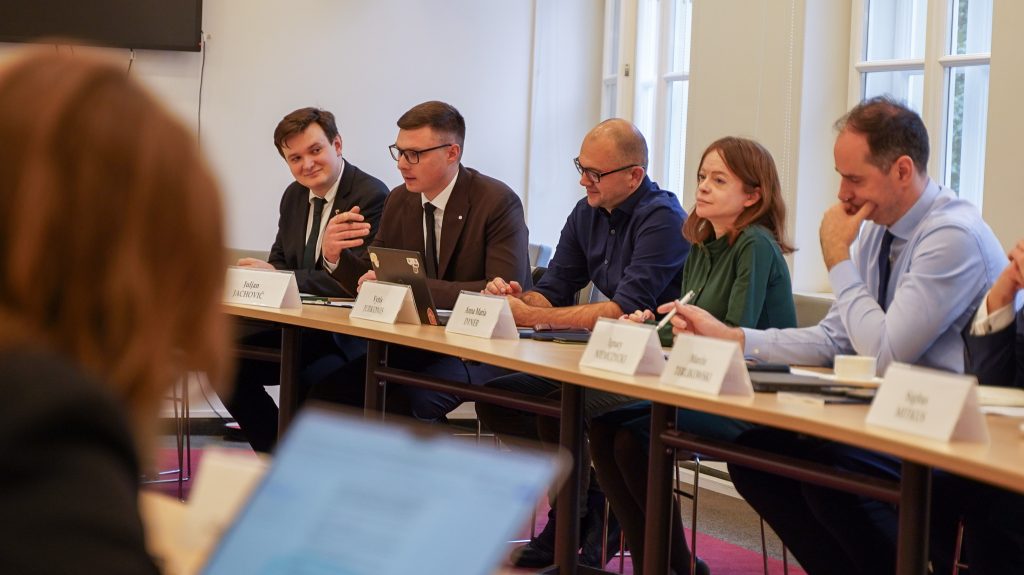
- Coordinating Lithuanian and Polish approaches to Belarus. The final panel addressed the Belarusian regime’s relationship with Russia, recent shifts in US policy towards Minsk, and opportunities for closer coordination between Lithuania, Poland, and the European Union. The discussion featured Vytis Jurkonis, GSSC Board Member and Associate Professor at Vilnius University’s Institute of International Relations and Political Science, and Anna Maria Dyner, Head of PISM’s International Security Programme. The panel was moderated by Tomasz Zduńczyk of PISM’s Europe Programme.
The annual Lithuanian–Polish Roundtable provides an established platform for dialogue between policymakers and experts from both countries. By fostering exchanges on shared security challenges and policy priorities, the initiative contributes to closer bilateral coordination and a more resilient regional security environment.